
Or the curious life of logos fabricated for film.
We live in a world of logos. From a flyer on the doormat for the local doner shop to an elaborate multimedia installation for the most glamorous global, branding surrounds us. It is then, of course, no surprise that logos have long found their way into cinema. But what is more interesting is how their cinematic appearances track the rise of the logo itself as a cultural force: from the functional cattle brands of early Westerns to the visual monikers of corporate empires found in today’s blockbusters.
This story is made possible by what the blogosphere has called the “fauxgo”: or, in layman’s terms, the fabrication of a logo as the face of a fictional company. On screen these marks are rarely the star; they mostly live within a given mise en scène as texture, a small detail that has the effect of making the on-screen world more believable. But sometimes they slip their boundaries and take on lives of their own.
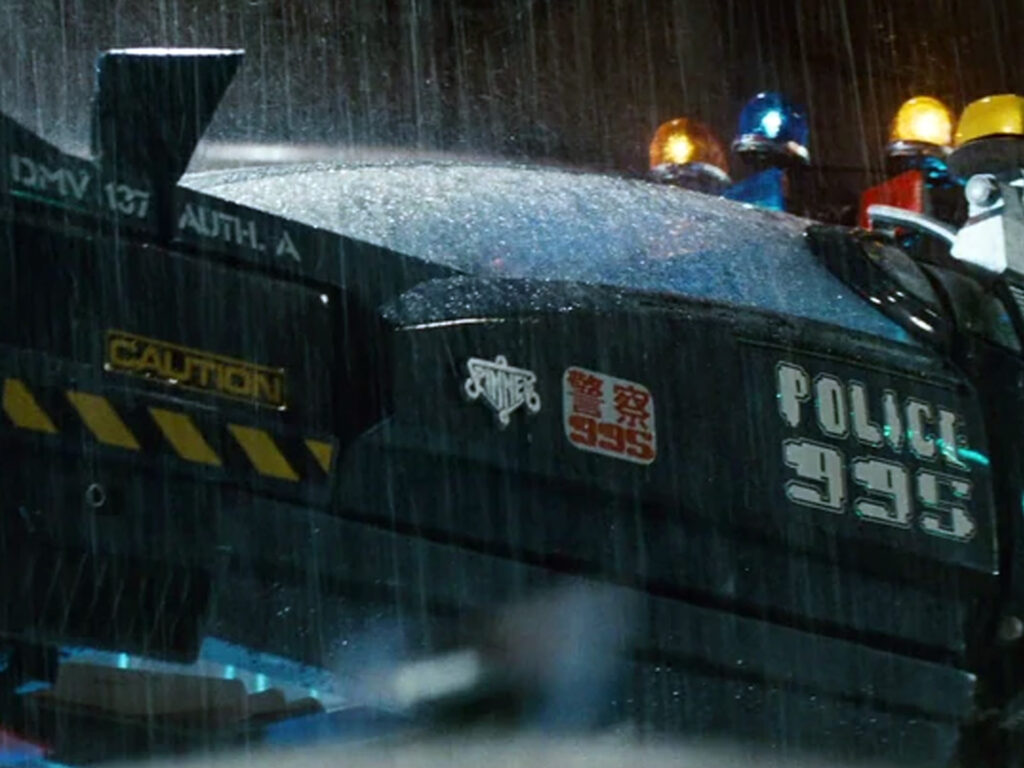
My fascination began with one such moment of slippage: the unlikely pairing of high-concept science fiction and daytime cookery. One particular afternoon I noticed a rather famous TV chef wearing an apron emblazoned with the Spinner logo from Bladerunner. In that moment the juxtaposition seemed strange but actually it was probably bound to happen. Flick or click through the adverts appearing within film magazines and websites and you’ll find dozens of designs lifted from fleeting screen appearances, sold back to film fans on a smorgasbord of merch.

Spinner logo from Bladerunner / Bladerunner 2049
Copyright: Alcon Entertainment
Logos in the frame
This apparent ability to transgress the screen and circulate independently suggests something worth thinking about: what exactly are these fabricated logos, and what can they tell us about design, cinema, and authenticity?
Film theory gives us a useful starting point. Employed after the classical mode of theatrical theory the word diegesis means the telling of a tale, while mimesis refers to showing. Film criticism complicates this, repurposing “diegetic” to describe anything that exists within the characters’ reality. A gunshot is diegetic; the soaring music over it is not.
The concept extends neatly to logos. A location subtitle is non-diegetic, existing only for the audience. A logo that appears on a building, uniform, or prop, however, is diegetic: it inhabits the same world as the characters
Current debate about logos in cinema tends to focus on product placement. Renting out screen space helps productions raise revenue, and gives advertisers unusually long-lasting visibility. For the audience, though, the results are mixed. A familiar logo can add credibility to a scene, but too heavy a hand quickly breaks the spell. A misplaced logo reminds us that we are watching a film.
Which raises a central design problem: how do you create a logo that strengthens the narrative rather than undermines it?
The fauxgo problem
Real logos build recognition slowly, through repetition and investment. They represent both continuity and identity. A fauxgo, by contrast, exists for a moment. It has no lived presence, no corporate history. Its task is simpler and harder at the same time: to look convincing at first glance.
This makes every fabricated logo an interpretation of authenticity rather than authenticity itself. And it shows. They often feel slightly “off”: too slick, too generic, or simply clumsy. At best, they pass unnoticed; at worst, they jar.
Certain clichés recur: swooshes, gradient fades, awkward typography, spinning globes (I am thinking of Stark Industries in Iron Man but maybe you have your own example?). One could argue this reflects the broader quality of contemporary design, but more often it reflects the reality of production pressures.
Time on a film set is scarce, and design is rarely the priority
Art directors work fast, moving from sketch to camera-ready logo in days. What matters is plausibility in the instant, not refinement over years. Yet once a fauxgo leaves the frame — printed on a hoodie or badge — it enters a different economy. Its value is no longer tied to its form but to its associations. Stark Industries’ clunky typography might be unconvincing on its own, but the popularity of Marvel makes it iconic. Fans forgive the flaws, because what they’re buying isn’t typography but connection. In this way, the incidental becomes symbolic. The fauxgo becomes shorthand for an entire fictional world.
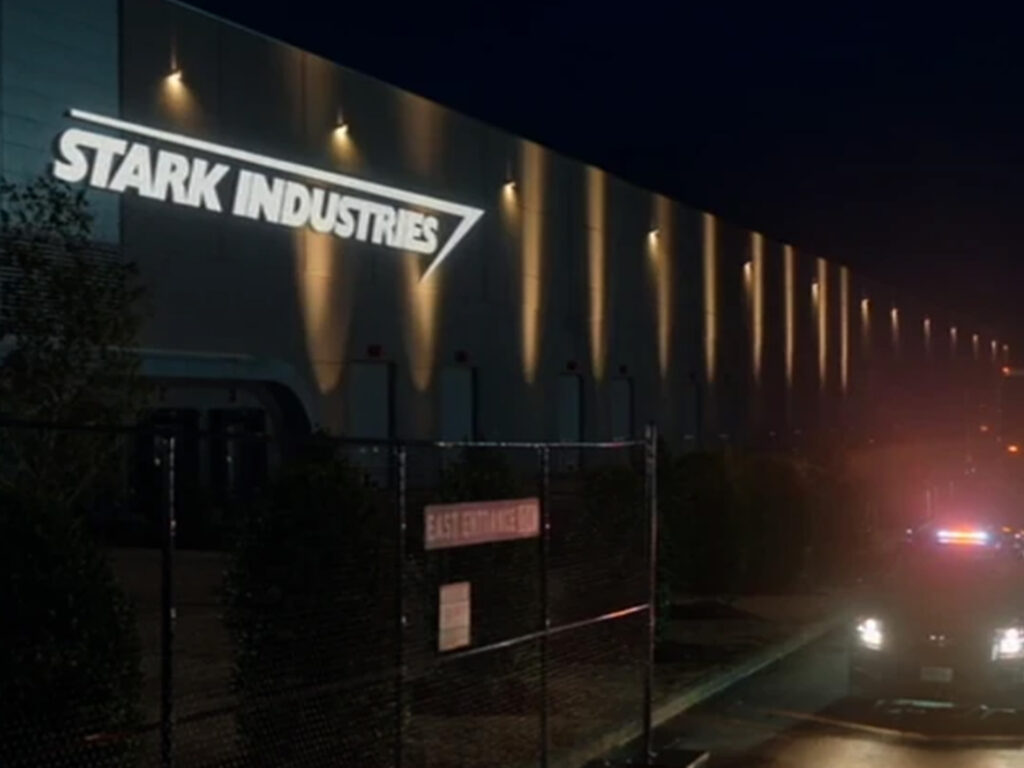

Stark industries logo from ironman
Copyright: Marvel Characters, Inc
When the logo takes the lead
Occasionally, the fabricated logo steps centre stage, fronting the film’s own marketing. Think of the ghost in Ghostbusters or the dinosaur in Jurassic Park: both began as in-world devices before becoming global brands in their own right. At this point the difference between fabricated and functional logos dissolves. For the audience, there may be no distinction at all.
Still, there is a difference. Even on a T-shirt, fauxgos carry a cinematic aura. They feel slightly apart from “real” design work because they reach us through the filter of cinema.
They are framed, and that framing lends them theatricality. Take Ablixa, the pharmaceutical brand created for Side Effects by Pentagram’s Emily Oberman. Rarely do prop logos stir the design press, but this one did — precisely because it looked so real. It reminded critics that fauxgos are a category of their own: design work that is both familiar and strange, convincing and artificial.
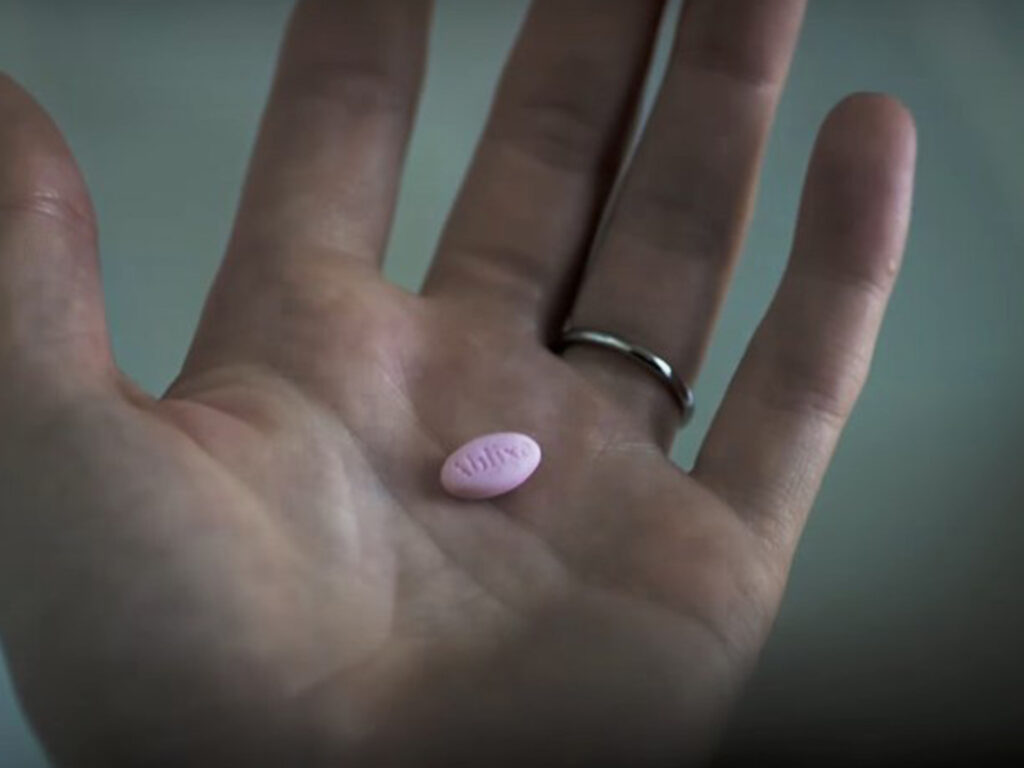

Ablixa logo from side effects
Copyright: Open Road / Raven Capital
Denouement
At this point the work of French sociologist and cultural theorist Jean Baudrillard becomes useful. Every fauxgo fits his notion of the simulacrum, a reproduction of something that never existed. His notion of the hyperreal — a famous example being his proposal that Disneyland is significant only as a copy of a world that never was — suggests a paradox at the heart of branding practice itself. Could it be possible to say that logos are always inauthentic? They certainly seduce and idealise in their presentation of only the polished face of an organisation.
Seen this way, fauxgos may be more “honest” than their real counterparts. They declare their artifice. They are designed to be convincing but not enduring, and in that sense they may be closer to the truth of branding: the creation of an image that is always detached from any messy reality.
I began by questioning the authenticity of fabricated logos. But perhaps that is the wrong target. A more interesting question is whether, to paraphrase a certain Mr Tyrell, screen logos are more real than real?