

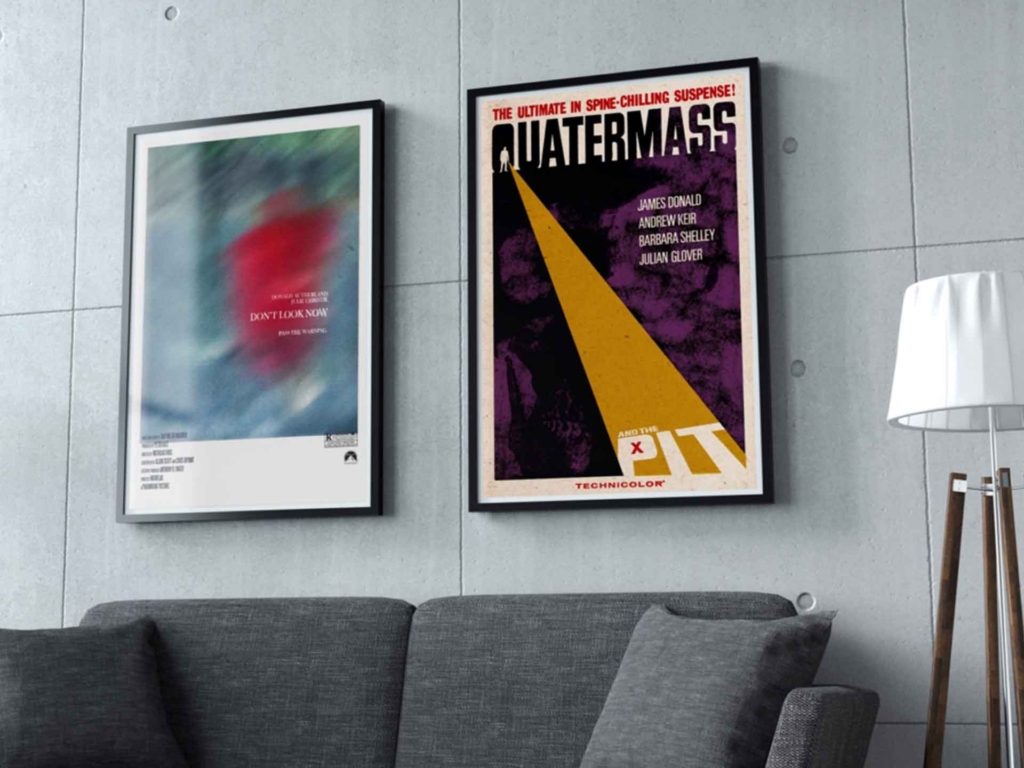
Posters for films both old and new seem like they are literally everywhere these days.
It’s like the doors on the official cinema archives exploded and spread an incredible range of graphic styles and approaches across the Internet and onto the walls of trendy boutiques. Intriguingly, these visual treats are for the most part unofficial – created by enthusiastic amateurs and professional designers on downtime – nothing to do with the productions that they reference. So, if they aren’t actually advertising anything what in the name of Spielberg are they for?
To start to answer this question let us first understand something of the ethnographical phenomenon of ‘fandom.’ History shows us that the need to be a disciple of something is hardwired into the human psyche. Today this urge has manifested itself as adoration, or ‘fanaticism,’ for entertainment media products e.g. sports teams, musical personalities or, most relevant to our discussion here, intellectual properties.
The first ‘fans’ therefore are popularly considered to be enthusiastic 19th Century Sherlock Holmes readers, a group so incensed by the killing off of their favourite cocaine imbibing detective that they organised street protests with enough efficacy that author Sir Arthur Conan Doyle changed his mind and proceeded to have the great man clamber out from underneath the Reichenbach Falls. Today we are equally passionate about our favourite characters (the latest incarnation of Mr. Holmes included) that we purchase billions of dollars worth of licensed goods every year, attend countless exhibitions and live shows, watch endless hours of box-sets and still, when deemed necessary, organise ourselves in protest against proposed full stops to our favourite characters’ storylines.
Another response is the urge to create fan-art, or expressive personal artworks that use any available medium; painting, sculpture, video, music, fashion et al. Its an arena where anything goes as long as it celebrates a given character or property. A sub-genre of this movement being explores this maxim via the idiom of the entertainment poster.
What started on a small scale has now grown into a widespread fever
Collectively these have been dubbed ‘Alternative Movie Posters,’ (or for the purposes of this blogs word count ‘AMP’s). What started on a small scale has now grown into a widespread fever supported by social media and a host of dedicated websites (Alternative Movie Posters.com, Repostered.com and DeviantArt.com), which enable artists to share their work globally. Films are still a popular enough pastime that a content hungry media mainstream picked up on the story, bringing it to a wider audience, which in turn inspired a small boom in print-to-order product via popular online stores and high street shops.
Whilst AMPs seem like the perfect output of the social media age actually the taste for alternate versions is as old as cinema itself. From the late 19th Century to the 1980s it was common for individual countries and individual exhibitors to create their own studio-sanctioned promotional material. As film marketing got more savvy in the light of the unprecedented popularity of certain 1970s product like Jaws and Star Wars a standardised ‘branded’ approach started to be seen, where one set of artwork was distributed globally, differing only by language version. Whilst undoubtedly good for the bottom line this development has been much criticised by cineastes for resulting in today’s leaning towards simplistic posters that display no more imagination than that needed to combine an enhanced photograph of a star with some serviceable typography.
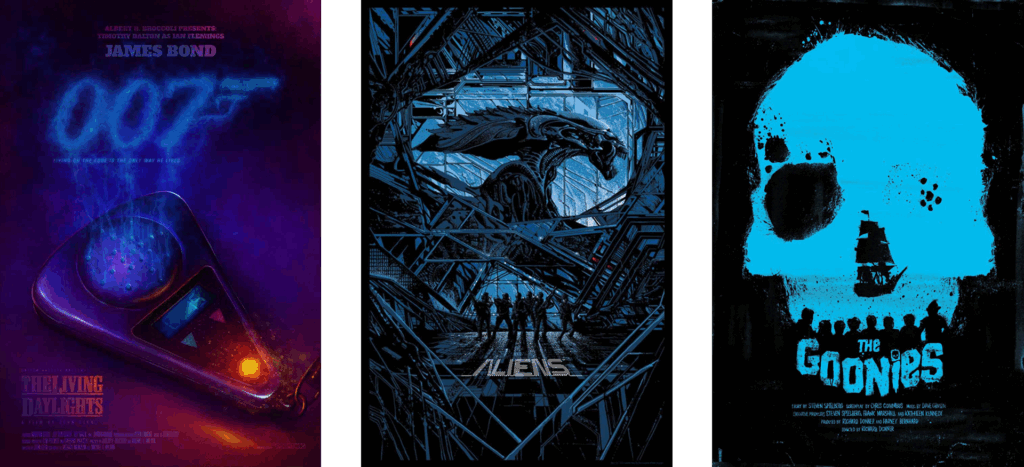
It seems possible to say that AMPs are a critique of this practice in graphical form, Simon Hawes of Alternative Movie Posters.com agrees; ‘The generic key art format is definitely a factor in the rise of fan-made posters. People are crying out for more creative work around releases, and I think that is certainly filtering through.” As official posters increasingly opt for the path of least intellectual resistance, AMPs are clearly choosing the opposite, namely a heavy barrage of clever visual puns and metaphors very often exquisitely rendered. Hawes continues; “AMPs allow people to create something totally unique that you wouldn’t get from a studio, as there are no limitations and anyone who can draw, use a computer, or hold a brush and loves movies instantly qualifies to be able to make an AMP. Movies are where you go to escape and be transported somewhere amazing, and I think the sense of creating an alternative poster is someone’s own form of escapism and love for film and art.”
The overt attempt at intelligent and visually attractive audience engagement is often criticised by the combined design industry media and creative’s working in the film industry and beyond, as somehow being not real design
Resultantly it scans that AMPs should be accepted by all as being the potential of the poster medium released from commercial restraint but surprisingly this is not the case. The overt attempt at intelligent and visually attractive audience engagement is often criticised by the combined design industry media and creative’s working in the film industry and beyond, as somehow being not real design, something inauthentic and of less worth compared to professional cinema marketing materials. A common commentary on the Blogosphere goes along the lines that they are just ‘hipster wannabe nonsense.’ but in more lettered terms Mike Salisbury (legendary designer of posters for Raiders of the Lost Ark and Jurassic Park amongst hundreds more) makes the point that they are flawed because “no one who did them had to go to meetings, read the script, view the research, listen to a lot of voices with opinions and do about a hundred concepts and a hundred more revisions competing with other groups doing the same.”
Without any commercial sensibilities informing the outcome they perhaps cannot be considered as being true to the requirements of the advertising poster medium, a point furthered when we consider the fact that an AMP operates in a different way to a ‘non-hipster’ treatment. Corey Holms (designer of posters for such small films as The Sixth Sense, Lost in Translation, Watchmen and the legendary Soprano’s ident) explains; “The goal of a studio commissioned movie poster is to create interest in a property that has not been seen yet by the public whereas the point of the fan-made movie poster is nostalgia. One requires you to have no knowledge of the film and sparks an interest, while the other requires you to be an expert with a secret handshake. The AMP is reliant on prior knowledge, which drastically changes the way it needs to communicate”
The studios adhere to what is known as the ‘unwritten rule’ of fan art, that one upsets your fans at ones peril
What at first seemed like harmless, child-like fun is suddenly starting to get a little complicated isn’t it? A good point to mention now is the rather grown-up subject of intellectual property copyright law. This ‘prior knowledge’ is seen often in AMPs’ reliance on presenting iconography from their parent film, such as key scenes or production design, verbatim, elements that in 2D static form don’t actually make any sense unless you have seen the film. Resultantly, whether you think they are creative or not, it cannot be denied that by using that methodology AMPs are actually basing themselves in someone else’s ideas with the fairly safe assume assumption that the copyright owner has not been asked for permission. Every time an AMP artist publishes a new work they must surely go straight to the letterbox and wait for the court action to arrive?
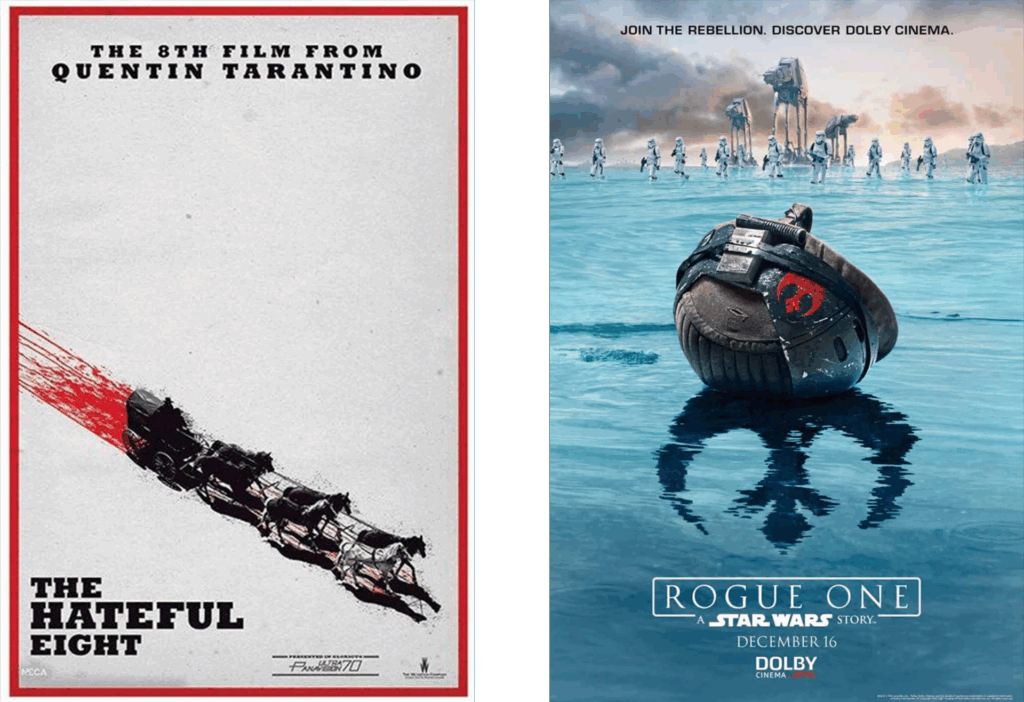
The reality is that doesn’t actually happen. The studios adhere to what is known as the ‘unwritten rule’ of fan art, that one upsets your fans at ones peril. IP owners accept that whilst personally they may feel that AMPs are essentially people promoting themselves on other peoples ideas to stop them would essentially be turning away your own customers so the studios tend to turn a blind eye to AMPs. Interestingly this submissive reaction is now developing into a full-on acceptance of the genre. Fan art being is now used to brand special screenings, events and home entertainment releases, most famously when Tarantino posted an AMP for Django Unchained on Facebook which was then used as an official campaign tool by the studio. More exciting still is the emergence of new poster style, a hybrid between studio-friendly commercial practicality and the semiotic approach of DIY posters, seen in special edition posters catering for a more culturally aware audience, notable examples include the recent Hateful Eight teaser or IMAX special edition Star Wars: Rogue One posters.
In closing, the influential designer Neil Kellerhouse (designer of posters for Gone Girl, Social Network, HBOs House of Cards, Finding Nemo and many more) offers a final thought; ‘I try to take a conceptual approach when I begin a new poster, this idea or concept can then be manifested hundreds of way. After I get these concepts, I try to apply and use imagery from the film or something that is genuine/authentic to the film and what it’s trying to say. I think someone that doesn’t have access to this official imagery has to use concept and metaphor to create something effective.’ In this analysis the AMP becomes simply a pragmatic way of creating a legitimate visual expression for creatives that aren’t able to call on official asset libraries for inspiration. With the question as to whether the worth of a poster is on its genesis as sanctioned or DIY also largely negated with fan-art influencing real art perhaps there is an even more interesting intellectual minefield?
Does the rise of the AMP herald a paradigm shift in the way that society thinks about art in general? Could it be that society is slowing moving away from judging art on what it looks like to assessing it on cultic value? This doesn’t mean we should all dress up in robes and masks and dance around an original of a rare Wicker Man release poster, however enjoyable that sounds. What this means is that art becomes about honouring something through creative representation, the original function of art if you will, when we used to make images in celebration of deities, animals or just plain human physical beauty, nothing more nor less than fan-art in fact. All we have done is shift our piety over to pop-culture.